What Happens During a Stroke? Pathophysiology, Types of Stroke, and Why Fast Treatment Is Critical
- Terrance DeAngelo
- Feb 25
- 3 min read

Updated: Feb 27

A stroke is a medical emergency. When blood flow to part of the brain is interrupted, brain cells begin to die within minutes. Delays in diagnosis or treatment can mean the difference between recovery and permanent disability.
In medicine, there is a simple phrase: “Time is brain.” That phrase reflects a biological reality. Understanding what happens inside the brain during a stroke helps explain why rapid diagnosis, imaging, and treatment are essential—and why delays in care can have devastating consequences.
The Pathophysiology of Stroke: What Happens Inside the Brain
The brain depends on a constant supply of oxygen and glucose delivered through the bloodstream. Unlike other organs, brain tissue cannot tolerate prolonged interruption of blood flow.
When circulation is reduced or blocked:
Brain cells lose oxygen and energy.
Without energy, they cannot regulate their internal balance.
Cells begin to swell and malfunction.
Toxic chemical signals are released.
Inflammation develops.
Irreversible cell death follows.
This process begins within minutes.
In an ischemic stroke, two zones form:
The core — brain tissue already irreversibly damaged.
The penumbra — surrounding tissue that is at risk but still salvageable if blood flow is restored quickly.
Modern stroke treatment is focused on saving the penumbra before it converts to permanent infarction.
Types of Stroke
Understanding the different types of stroke is essential to understanding why treatment must happen quickly and why misdiagnosis can be so dangerous.
Ischemic Stroke (Most Common)
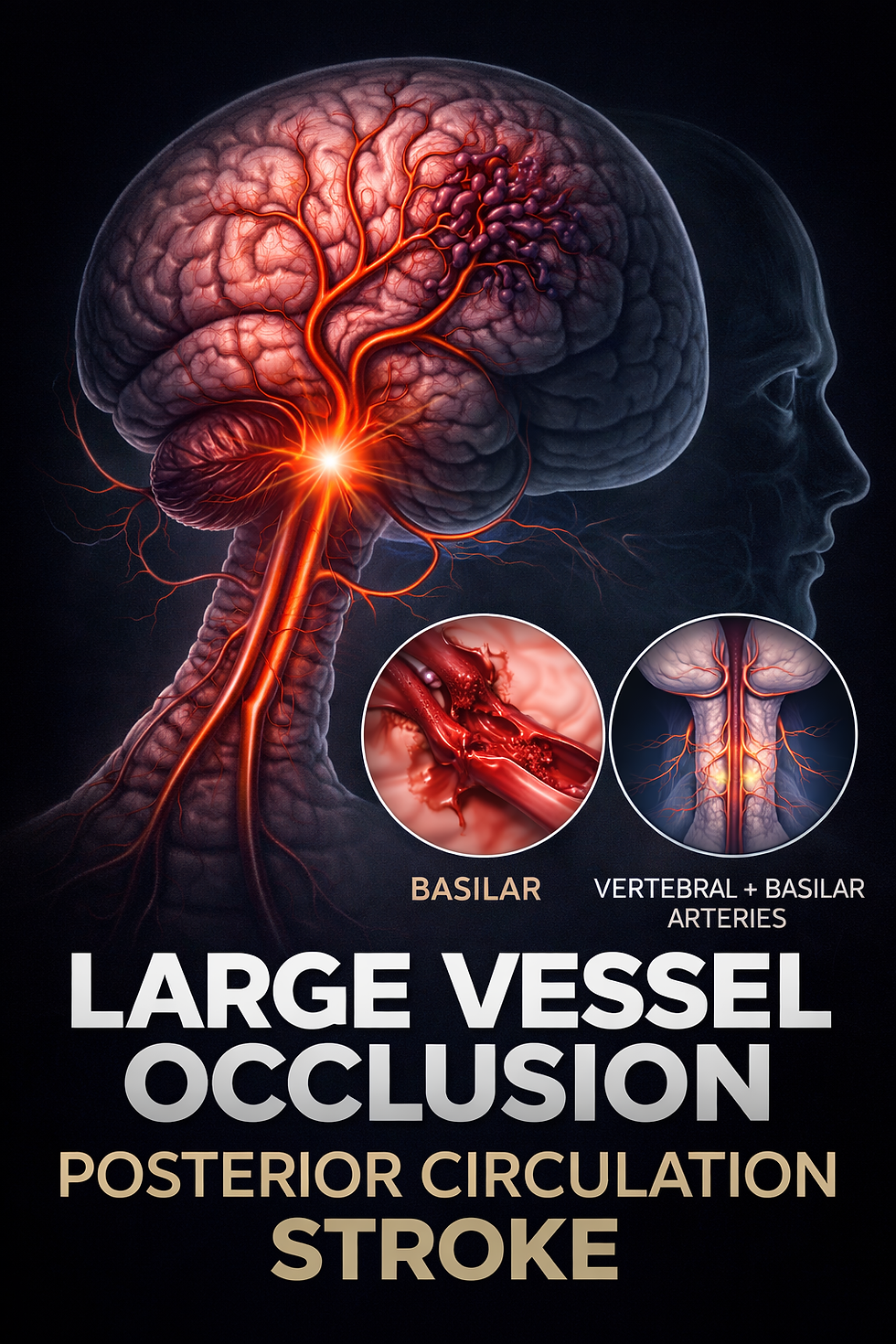
Approximately 85% of strokes are ischemic. These occur when a blood vessel supplying the brain becomes blocked by a clot. Common causes include:
Thrombotic stroke — a clot forms within a narrowed artery.
Embolic stroke — a clot travels from another part of the body (often the heart) and lodges in a brain artery.
When blood flow stops, brain tissue begins to die. Restoring circulation quickly is critical.
Hemorrhagic Stroke
A hemorrhagic stroke occurs when a blood vessel ruptures, causing bleeding in or around the brain. This may result from:
High blood pressure
Ruptured aneurysm
Vascular abnormalities
In these cases, injury occurs both from loss of blood flow and from pressure caused by bleeding within the skull. Rapid neurological and sometimes surgical intervention is required.
Transient Ischemic Attack (TIA)
Often referred to as a “mini-stroke,” a TIA involves temporary interruption of blood flow with symptoms that resolve. Even though symptoms improve, a TIA may be a serious warning sign of an impending stroke secondary to (transient) blood flow disruption and requires urgent medical evaluation.
Why Immediate Treatment Is Necessary
During an untreated ischemic stroke, nearly two million neurons can die each minute. The longer treatment is delayed:
The larger the area of permanent brain injury.
The higher the risk of paralysis, speech loss, or cognitive impairment.
The more limited the potential for recovery.
Modern stroke treatment may include:
IV thrombolytics (tPA) to dissolve clots
Mechanical thrombectomy to remove clots in large-vessel strokes
Rapid CT or MRI imaging to determine stroke type
Blood pressure and intracranial pressure management
These treatments only work within defined time windows. Delays in recognition, imaging, or escalation of care can permanently alter the outcome.
Recognizing Stroke Symptoms
Stroke symptoms often appear suddenly and may include:
Facial drooping
Weakness on one side of the body
Slurred or difficult speech
Vision changes
Sudden confusion
Severe headache
Even subtle symptoms require immediate emergency evaluation.
When Stroke Diagnosis Is Delayed
Failure to promptly evaluate stroke symptoms, order appropriate imaging, or activate stroke protocols can allow salvageable brain tissue to die.
This is not a slow process.
The biological injury progresses minute by minute while decisions are delayed.
In hospital and emergency department settings, timely recognition, imaging, and intervention are critical components of the standard of care.
Final Thoughts: Why This Matters
Stroke is not simply a blocked artery or a bleeding event—it is a rapidly evolving neurological emergency driven by measurable biological changes in the brain.
Understanding the pathophysiology makes one thing clear: early recognition and immediate treatment save brain function, independence, and lives.
When stroke symptoms are missed, minimized, or not acted upon quickly, the consequences can be permanent. For patients and families across Pennsylvania—including those treated in hospitals throughout Pittsburgh and Philadelphia—delays in diagnosis or treatment can change the course of a life in a matter of minutes.
Education, rapid response, and accountability all play a role in improving outcomes and protecting patients when time matters most.
Disclaimer:
This article is for educational and informational purposes only and does not constitute medical or legal advice. It is not a substitute for professional medical evaluation or treatment. If you believe you are experiencing a medical emergency, contact emergency services immediately.

Comments